
TL;DR
Winter prep in Montgomery County means timing your last lawn feeding before Maryland’s November 15 fertilizer cutoff, lowering your final mowing height, clearing leaves, watering and mulching plantings before the ground freezes, and protecting hardscape from freeze-thaw damage. Four Seasons Landscaping can handle the seasonal work — from tree care to drainage, lighting, and more.
Winter can be sneaky. Arriving quietly. Briskly. Without the proper preparation, your landscape could get caught off guard.
In Montgomery County, the fall-to-winter shift tends to happen quickly. One week you’re raking leaves in a short-sleeve tee. The next? An overnight freeze has settled over your yard.
Much of the county sits in USDA hardiness zones 7a and 7b, with the first hard frost arriving by late October. That means the window for meaningful winter prep is shorter than many homeowners expect.
But here’s the good news. A little effort now pays off in dividends in the spring.
Lawns that are prepped properly green up faster, planting beds come through the cold in better shape, and hardscape features are far less likely to suffer damage from freezing and thawing.
Here’s how to prepare your lawn and landscape for winter and get ahead of the game before the chill fully sets in.
Give your lawn its most important feeding of the year
For the cool-season grasses dominating Maryland lawns — mainly tall fescue and Kentucky bluegrass — fall is the single most important stretch of the growing season.
As the air cools and rainfall increases, these grasses pour their energy into building deeper roots. This carries them through winter and into a healthier spring.
There’s an important local rule to keep in mind, however. Under Maryland’s Lawn Fertilizer Law, homeowners are prohibited from applying lawn fertilizer between November 15 and March 1. That means timing is everything. Your final feeding of the year needs to go down before the cutoff. The law, which exists to protect the Chesapeake Bay from nutrient runoff, also prohibits applying fertilizer when the ground is frozen or heavy rain is on the way.
Keep mowing (but adjust as the season winds down)
Grass keeps growing until the hard freeze, so don’t put the mower away too early. As you approach your last few jobs of the season, drop the mower height by about half an inch to an inch below your typical setting. Slightly shorter grass heading into winter is less likely to mat down under snow, which helps prevent snow mold and other cold-weather turf problems.
Once you’ve made that final pass, be sure to sharpen the mower blade before it goes into storage. You’ll be thanking yourself come spring, when a clean cut keeps grass blades from tearing and browning.
Deal with the leaves before they smother the lawn
A thick blanket of wet leaves left sitting on the grass blocks light and traps moisture. These are perfect conditions for disease. Your options? Rake and remove them, or use a mulching mower to chop them into fine pieces that break down and feed the soil naturally. Bagged or shredded leaves also make excellent (and free) mulch for garden beds.
You can skip reseeding bare patches. Dormant seeding of tall fescue late in the season rarely succeeds in Maryland’s climate. Just make a note to overseed in early spring instead.
Protect your plantings, beds, and trees
Your lawn isn’t the only thing that needs attention. Trees, shrubs, and perennials can all benefit from some end-of-season TLC:
- Water before the ground freezes. Evergreens and newly planted trees and shrubs lose moisture through winter. A deep watering while the ground is still manageable helps them avoid winter burn.
- Refresh mulch around beds and root zones. A two-to-three-inch layer insulates roots against the freeze-thaw swings that are so common here. Just be sure to keep the mulch pulled back slightly from trunks and stems.
- Give young trees extra support. Recently installed trees are the most vulnerable to cold, wind, and hungry wildlife. They’re worth protecting first.
This is where an experienced crew earns its keep. Four Seasons Landscaping’s softscaping and tree installation services are built around the same principle: healthy plants begin with the right care at the right time.
If storms have thinned out your trees — something plenty of Montgomery County homeowners deal with — fall and winter are a natural time to plan replacements.
Don’t forget your hardscape and drainage
Winter is hard on the built parts of your landscape, too. Water seeps into small cracks in patios, walkways, and walls, then expands as it freezes. This repeating freeze-thaw cycle can slowly widen gaps and shift stone or pavers over time. Poor drainage makes it worse by letting water pool where it shouldn’t.
A well-built retaining wall with proper drainage can do wonders to manage runoff and protect sloped areas through the wettest, iciest months. If you’ve noticed pooling water, eroding soil, or a wall that’s beginning to lean, it’s worth having it evaluated before winter rather than after.
Make the most of the season you’re heading into
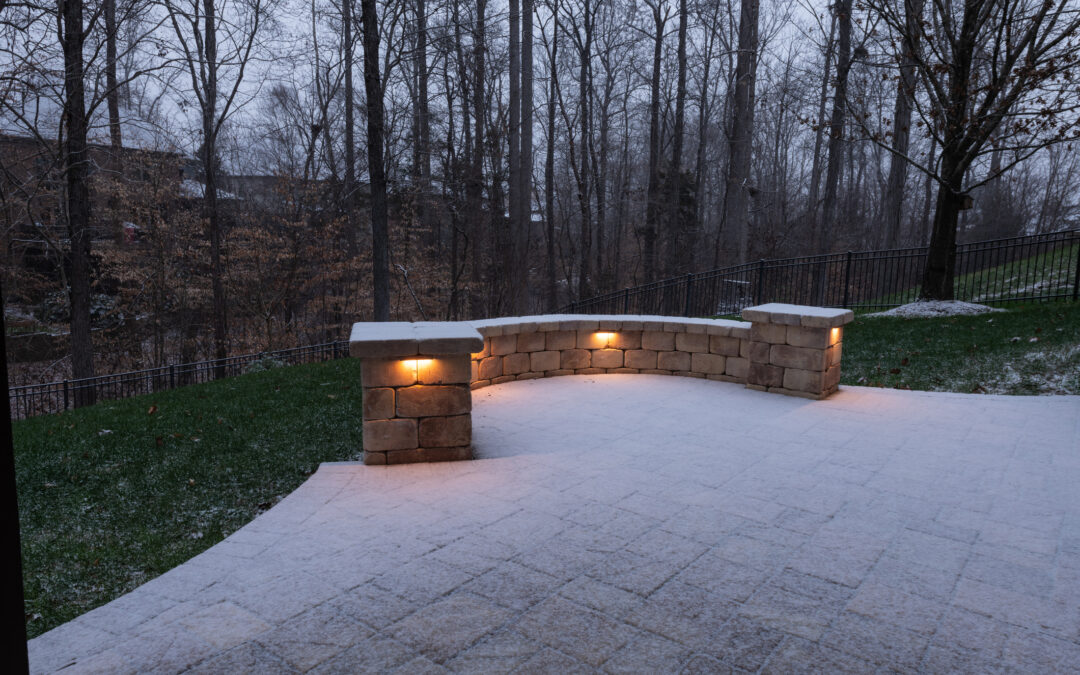
Winter prep is about protection, for sure. But it’s also a chance to set up the outdoor space you want to use. Shorter days mean your landscape spends plenty of time in the dark, so thoughtfully placed outdoor lighting keeps walkways safe and your property looking its best long after sunset. And there’s no better time of year to gather around a warm outdoor fireplace or fire pit, which turns a chilly evening into a reason to head outside instead of staying in.
Let Four Seasons handle the seasonal heavy lifting
As a family-owned design/build firm serving Montgomery County since 2002, Four Seasons Landscaping takes a year-round view of your property. We work with homeowners across Rockville, Gaithersburg, Kensington, Damascus, Boyds, and the surrounding area year-round to keep their landscapes healthy through every season. Beyond design and installation, the team offers ongoing maintenance and seasonal enhancements to keep your landscape healthy year-round—not just during the growing months.
If you’d rather spend your fall weekends enjoying your yard than winterizing it, reach out for a consultation. A little planning now is the surest way to a landscape that’s ready to shine the moment spring returns.
***
FAQs
When should I stop fertilizing my lawn in Maryland?
Maryland law prohibits applying lawn fertilizer between November 15 and March 1, so your final fall feeding should go down before the mid-November cutoff. Fertilizer also shouldn’t be applied when the ground is frozen or heavy rain is expected.
Should I cut my grass shorter before winter?
Yes — lower your mowing height by roughly half an inch to an inch for the last few cuts of the season. Shorter grass is less likely to mat under snow, which helps prevent snow mold.
Is fall a good time to plant trees and shrubs?
It can be. Cooler temperatures and reliable moisture help new plantings establish roots. Just be sure to water them well before the ground freezes so they head into winter hydrated.
Can I reseed bare spots in my lawn in late fall?
It’s typically better to wait. Dormant seeding of tall fescue rarely succeeds in our climate, so plan to overseed in early spring instead.