
Paver Patio Installation
Custom Paver Patios Serving Montgomery County, DC Metro & Surrounding Areas
Four Seasons Landscaping designs and builds custom paver patios across Maryland and Northern Virginia, the outdoor floor that turns an unused stretch of yard into a room you live in. A family-owned design-build firm based in Damascus, MD and building since 2002, we handle the full project: design, excavation, base, laying, and finish.
A patio is the most flexible surface you can add to a home. It’s a dining room in June, a lounge on a Friday night, a play surface for the kids, and the foundation everything else in the backyard is built around, the fire pit, the pergola, the outdoor kitchen. We design patios around the way you’ll actually use the space, then build them on a base engineered to stay flat and true through Maryland’s freeze-thaw winters.
Searching for a paver patio contractor near you? Contact Four Seasons Landscaping for a free on-site design consultation and estimate.

Why a Paver Patio Beats Poured Concrete
Homeowners choosing a patio surface almost always weigh pavers against a poured concrete slab. For Maryland’s climate, pavers win on nearly every measure that matters over time:
- They flex instead of cracking. A poured slab is one rigid piece, when the ground heaves in winter, it cracks, and a cracked slab means a jackhammer. A paver patio is hundreds of small units over a flexible base, so it moves with the ground instead of fracturing.
- Any single paver is replaceable. Stain one, chip one, or need to reach a utility line underneath? We lift and reset individual pavers, and the repair disappears. A concrete slab shows every patch.
- Design range concrete can’t match. Brick, tumbled stone, large-format concrete pavers, and natural stone come in colors, textures, and laying patterns (running bond, herringbone, basket weave, custom borders) that a gray slab simply can’t offer.
- Better drainage, less pooling. The jointed surface and engineered base move water off the patio more effectively, reducing the puddling and erosion that plague flat slabs.
- Stronger resale appeal. A professionally installed paver patio reads as a finished outdoor room to buyers, and it’s consistently among the outdoor features that add curb appeal and value in this market.
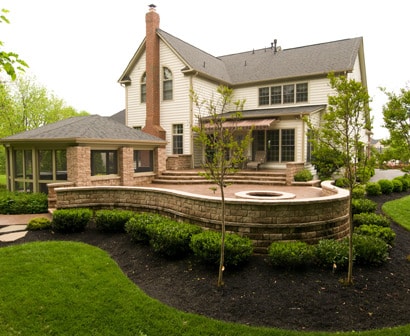
Paver Patios We Design & Build
We build patios for how people actually use their yards. The most common projects we’re asked for:
Dining & Entertaining Patios
Sized and shaped for a table, chairs, and room to move around them, the outdoor dining room. We plan the dimensions around your actual furniture (a table for eight needs more clearance than people expect), position it for the right mix of sun and shade, and set a clean path from the kitchen door so serving is effortless.
Lounge & Fire-Gathering Patios
A softer, more open layout built for conversation, lounge seating arranged around a fire pit or fireplace so the patio stays in use well past summer. We design the seating footprint and traffic flow so people can gather around the fire without the space feeling crowded or exposed.
Wraparound & Multi-Level Patios
For yards with slope or for homeowners who want distinct zones, we build multi-level and wraparound patios that step with the grade and separate dining from lounging from the grill. Retaining walls and steps tie the levels together and turn an awkward slope into the most interesting part of the yard.
Walkways, Steps & Patio Connections
The patio is rarely an island. We build the paver walkways, steps, and landings that connect it to the driveway, the front entry, the pool deck, or the garden, in matching or complementary materials so the whole property flows as one design.
The Complete Outdoor Living Space
Because the patio is the foundation everything else sits on, most of our patio projects grow into full outdoor rooms. We design the surface alongside:
- Fire pits and outdoor fireplaces to anchor the gathering area and extend the season
- Outdoor kitchens and bars built into or beside the patio for entertaining
- Pergolas and shade structures to define and cover the space
- Retaining and seating walls that shape the patio and add built-in seating
- Landscape lighting and plantings that make the patio usable and beautiful after dark
Designing these together, rather than adding them piecemeal later, means consistent materials, correct drainage, and one cohesive look.
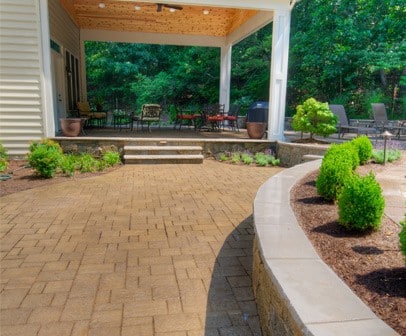
Choosing Your Paver Material: Brick, Concrete Paver, or Natural Stone
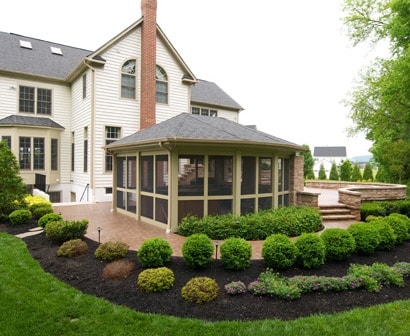
The three main paver families each suit a different priority, here’s the short version we walk homeowners through:
- Clay brick: warm, classic, and color-stable for decades because the color runs all the way through. Best for traditional and historic homes.
- Concrete pavers: the most versatile and budget-friendly, with the widest range of shapes, colors, and large-format modern looks. The workhorse choice for most patios.
- Natural stone: flagstone, bluestone, and travertine deliver a premium, one-of-a-kind surface where every piece is unique. Best when a distinctive, high-end look is the priority.
How We Build a Paver Patio That Stays Flat for Decades
A paver patio is only as good as what’s under it. The visible pavers are the last 10%, the base is what determines whether it stays level or ripples and sinks. Our process reflects that:
Step 1 — Design Consultation
We visit your property, look at the space, the grade, and how you want to use the patio, and talk through size, shape, and material. You get a clear layout and estimate before work starts.
Step 2 — Material & Pattern Selection
We help you choose the paver family and the laying pattern (running bond, herringbone, basket weave, or a custom border) that fits your home’s style and your budget.
Step 3 — Excavation & Grading
We dig to the right depth and grade the area so water drains away from the house. Skipping depth here is the number-one reason patios fail later, we don’t cut it.
Step 4 — Engineered Base
We install and compact a crushed-stone base (typically 4–6 inches, deeper for poor soils) in lifts, then a leveling layer of bedding sand. This is the structural heart of the patio.
Step 5 — Laying the Pavers
Each paver is set by hand to the chosen pattern, with tight, consistent joints and clean cuts at the borders and curves.
Step 6 — Edge Restraints & Polymeric Sand
We lock the perimeter with edge restraints so the pavers can’t spread, then sweep polymeric sand into the joints, it hardens to resist weeds, insects, and shifting.
Step 7 — Compaction, Cleanup & Walkthrough
We compact the finished surface for a locked, level patio, clean the site, and walk it with you, with care tips to keep it looking new.
Paver Patio Service Areas
Four Seasons Landscaping designs and installs paver patios throughout Maryland and Northern Virginia. Explore our paver patio pages by location:
- Paver Patios Kensington, MD
- Paver Patios Glenelg, MD
- Paver Patios Woodbine, MD
- Paver Patio Installation Rockville, MD
- Paver Patio Installation Germantown, MD
- Paver Patio Installation Arlington, VA
- Paver Patio Installation Gaithersburg, MD
- Paver Patio Installation Montgomery Village, MD
- Paver Patio Installation Potomac, MD
- Paver Patio Installation Damascus, MD
- Paver Patio Installation Clarksburg, MD
Patios Pair Well With
A patio is the foundation of the backyard, so it connects to nearly everything else we build:
Frequently Asked Questions About Paver Patios in Maryland
How much does a paver patio cost in Maryland?
Paver patio cost in Maryland depends on square footage, the paver material you choose (concrete pavers, brick, or natural stone), site prep and drainage needs, and any added features like steps, walls, or a fire pit. Straightforward concrete-paver patios sit at the lower end, while large natural-stone patios with multiple levels or built-in features run higher. Four Seasons Landscaping provides a customized estimate after a free on-site consultation; our typical project budgets range from $10–20k up to $50k+.
Are pavers better than concrete for a patio?
For Maryland’s freeze-thaw climate, pavers are generally the better long-term choice. A poured concrete slab is rigid and cracks when the ground heaves; a paver patio flexes with the ground, individual pavers can be replaced if damaged, and it offers far more design options. Concrete can be cheaper up front, but pavers usually win on longevity, repairability, and appearance over time.
How long does a paver patio last?
A properly installed paver patio can last several decades, often 25 years or more, because the individual pavers are extremely durable and any that shift or stain can be reset or replaced. Lifespan comes down to the base: a patio built on a deep, well-compacted crushed-stone base with proper drainage far outlasts one laid on a shallow or skipped base.
What paver pattern is best for a patio?
The best paver pattern depends on the look and the space. Running bond is clean and modern and uses fewer cuts; herringbone is the strongest pattern and resists shifting, making it ideal for larger patios and any surface that bears weight; basket weave reads traditional. We often combine a field pattern with a contrasting border to frame the patio. We’ll recommend a pattern based on your material, layout, and style during design.
Do paver patios need to be sealed?
Sealing is optional but beneficial. A sealer helps protect against stains, deepens the paver color, and stabilizes the joint sand, though it needs reapplication every few years. Many patios do beautifully unsealed. We’ll walk you through the trade-offs so you can decide what fits your maintenance appetite.
How do you keep weeds from growing between pavers?
The key is polymeric sand, a jointing sand that hardens when activated with water, locking the joints against weeds, insects, and washout far better than plain sand. Combined with proper edge restraints and a compacted base, it keeps a patio tight and low-maintenance for years.
Can you build a patio on a sloped or uneven yard?
Yes. Sloped yards are one of our specialties. We use grading, steps, and retaining walls to build multi-level patios that work with the slope instead of fighting it, often turning the most awkward part of a yard into its best feature.
How long does it take to install a paver patio?
Most residential paver patios take several days to about two weeks, depending on size, site conditions, drainage work, and added features. Excavation and base work take the most time because they’re what make the patio last. We give a firm timeline in your estimate and keep you updated throughout.
Design the Outdoor Room You’ll Actually Use
If you’re searching for paver patio installers near me, paver patio installation in Montgomery County, or custom patio design in Northern Virginia, Four Seasons Landscaping is your trusted local partner, with over two decades of design-build experience and craftsmanship you can stand on.
Contact Four Seasons Landscaping today for a free paver patio consultation and estimate. Let’s build the room where your backyard finally comes together.